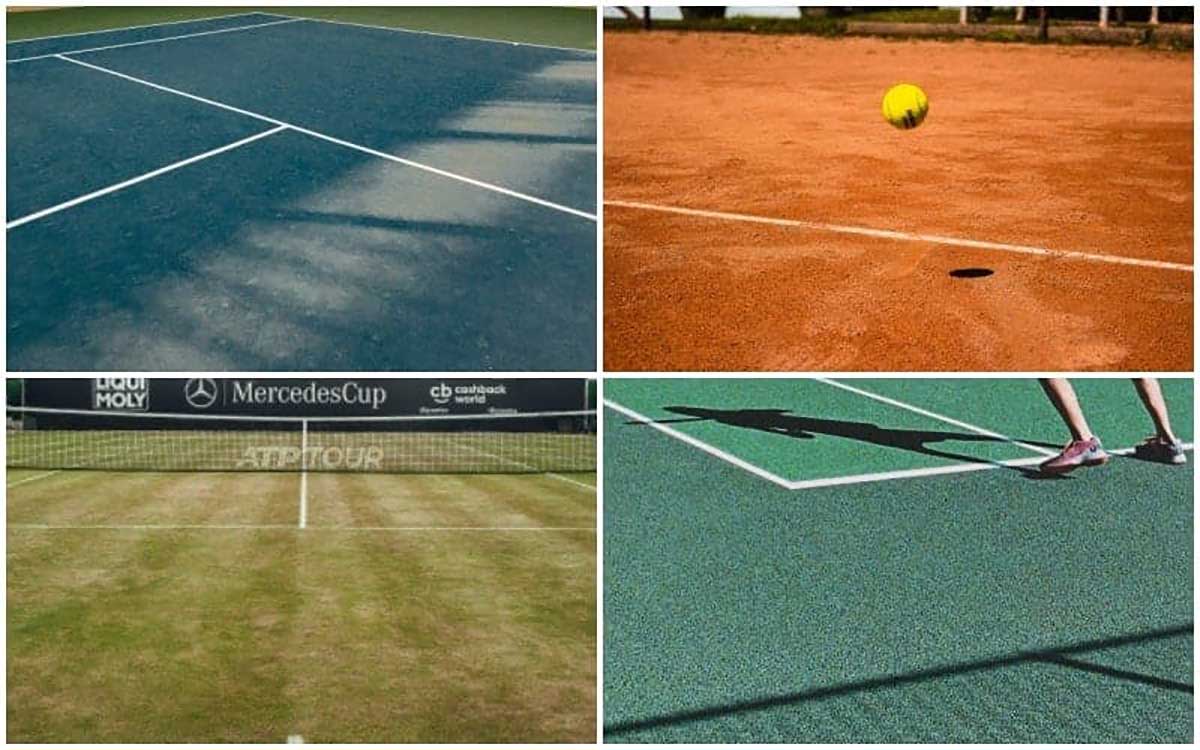
Every surface is a different game – find the one that suits your style and supports your development.
Tennis is unique in that it’s played on different types of court surfaces – each with its own speed, bounce, and physical demands. The surface you train and compete on can have a big impact on your game, your movement, and even your injury risk.
At our academy, we help players understand how each surface works, and how to adjust their technique, tactics, and footwork accordingly. Here’s a breakdown of the most common surfaces – and how to choose the one that fits your needs.
1. Clay Courts (Red Clay / Green Clay)
Slower surface | High bounce | Longer rallies
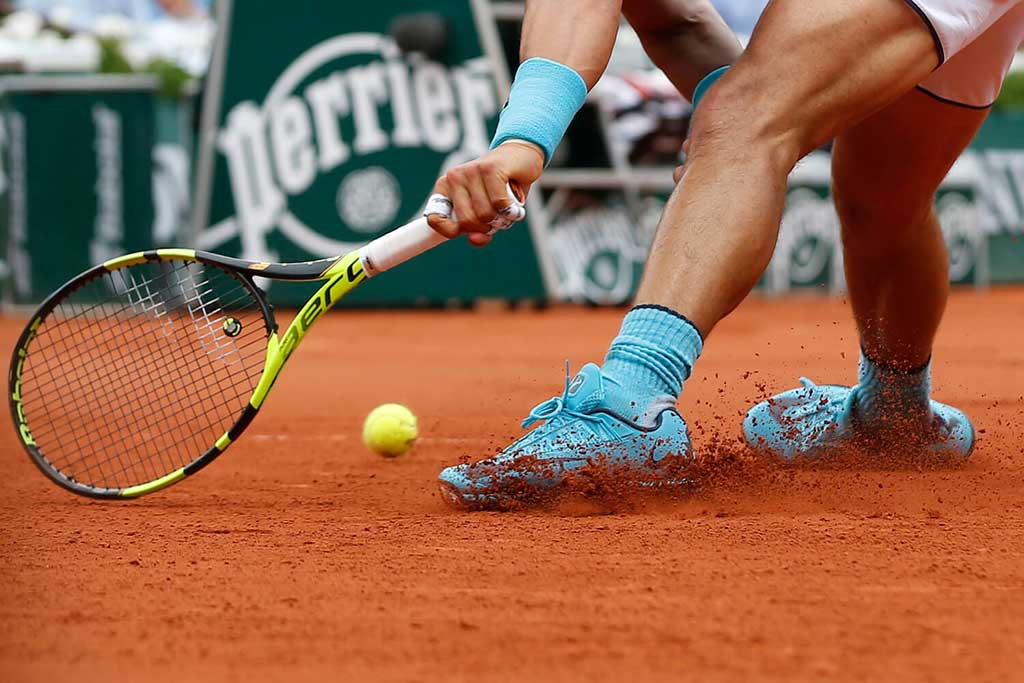
Clay slows down the ball and produces a high, consistent bounce. It rewards players with good endurance, patience, and tactical awareness. Points last longer, so players need to construct rallies and use angles effectively.
Best for:
Developing consistency and point construction
Improving footwork and sliding technique
Building endurance and mental resilience
Injury prevention (softer on joints)
Common in: Europe (especially Spain, France, Croatia), South America
2. Hard Courts (Acrylic / Concrete)
Medium-fast surface | Predictable bounce | Balanced play
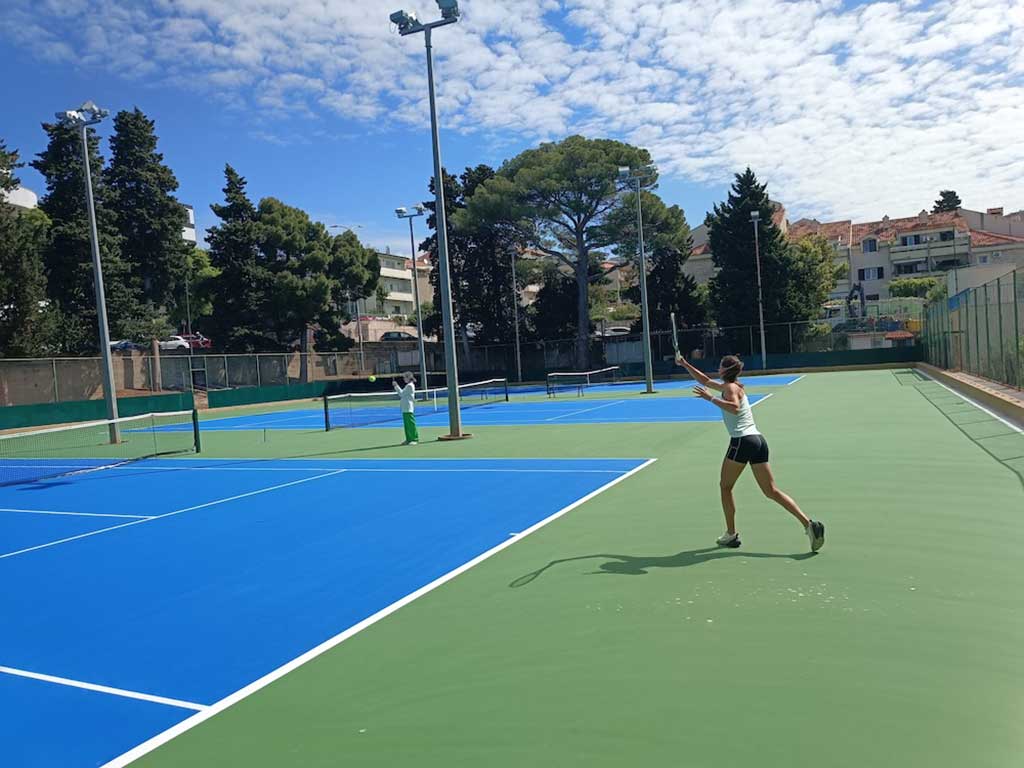
Hard courts are the most common surface worldwide. They offer a neutral balance between speed and bounce, making them ideal for all-around development. Movement is easier to control, and ball behavior is more predictable than on clay or grass.
Best for:
All playing styles (baseline, all-court, attacking)
Practicing timing and clean ball-striking
Competitive junior and adult play
Year-round use and consistency
Note: Hard courts can be more stressful on the knees and joints over time.
I’m a very positive thinker, and I think that is what helps me the most in difficult moments. Roger Federer
3. Grass Courts
Fast surface | Low bounce | Short points
Grass is the fastest surface, with a lower and more unpredictable bounce. It rewards players with quick reflexes, good volleys, and aggressive play. Slides are more difficult, and rallies are generally shorter.
Best for:
Serve-and-volley style players
Practicing reaction speed and attacking play
Advanced footwork and balance training
Common in: United Kingdom (e.g., Wimbledon), certain private clubs
4. Artificial Clay or Turf
Medium pace | Good grip | Easier maintenance
Artificial clay and synthetic turf mimic the feel of clay but with more consistent conditions and easier upkeep. These are often used at clubs where traditional clay is not practical.
Good for:
Recreational and club play
All-weather training
Players who want clay-like benefits with less maintenance
So – Which Surface Should You Choose?
There’s no single “best” surface – it depends on your goals:
For junior development: Clay courts are excellent for building a strong technical and tactical foundation.
For competitive players: It’s important to train on the surface used in upcoming tournaments.
For injury prevention: Softer surfaces like clay or artificial turf reduce joint stress.
For all-round play: Hard courts offer balance and adaptability to different styles.
We train players to adapt to any surface – not just to master one. This flexibility is key for long-term success, especially for juniors competing nationally or internationally.


